Showing posts with label VIA Technologies. Show all posts

Sunday, August 12, 2012

Cher Wang talks about what it takes to be a tech success

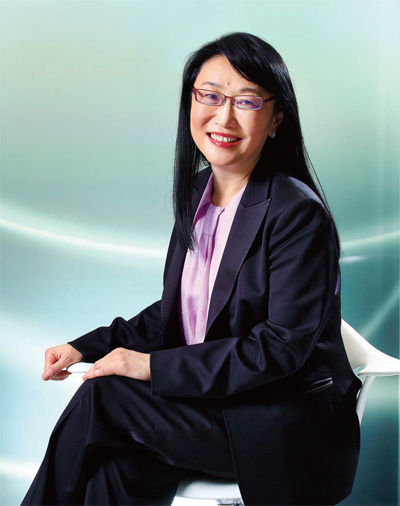
Cher Wang, Chairwoman of HTC, married to VIA's CEO Wen-Chi Chen, spoke to Entrepreneur about her success and what made it possible ... an 'X' factor, the company culture, market forces? Cher's main answer is that it's a dedication to monitoring market demand and then providing what the customer wants.


Entrepreneur: When it comes to product development, how do you stay ahead of the curve? 

Wang: Keen observation. We must always keep an eye on our environment, to keep track of what changes are happening in technology, in infrastructure, in markets, in how people across the world are living their lives, working and communicating. We need to anticipate these trends and innovate to meet them. Within HTC, hundreds of ideas are tested and discarded to find those rare ideas that define the HTC user experience.

Thursday, August 9, 2012

VIA granted a patent about identifying redundant data ... or something

I am not going to pretend to fully understand this patent. Patent 8229001 concerns an invention of VIA Technology's Eric Huang, and a method to identify coded_block_flag parameter ... er, or something like that. Here is the official information:

"The idea of video compression is to omit certain data of an image that are imperceptible to human's eyes, i.e. so-called visual redundancy. The data to be omitted are generally similar to other data in space or time dimension, and thus can be removed according to a compression algorithm. H.264/AVC is one of the mainstream standards of video compression. Compared to conventional digital video compression standards, such as MPEG-2, MPEG-4 or H.263, H.264 exhibits higher compression performance, and nevertheless reaches better image quality under the same compression ratio.
"The coding mechanism of H.264/AVC compression is block-based. In brief, an image frame is divided into a plurality of rectangular areas called as macroblocks (MB). The macroblocks are then encoded. First, intra-frame prediction and inter-frame prediction techniques are used to remove the similarities between images so as to obtain the residual differences. Then the residual differences are spatially transformed and quantized to remove the visual redundancy.
"An important factor of the high compression efficiency in H.364/AVC is the utilization of context adaptive binary arithmetic coding (CABAC). Please refer to FIG. 1A, in which the operation of a CABAC decoder is briefly illustrated. For CABAC decoding, the decoder 10 executes a decoding operation for each block to generate a corresponding coded_block_flag parameter. The coded_block_flag parameter indicates whether a given block contains any non-zero residual difference or not. If there is no residual difference, the coded_block_flag parameter is set to '0' for the given block. Otherwise, the coded_block_flag parameter is set to '1' if there exists non-zero residual difference in the given block.
"The decoding operation of the decoder 10 is based on a context ID which includes a base portion and an offset portion. The base portion can be obtained by a lookup table, but the offset portion is calculated from the coded_block_flag. Therefore, a key point to calculate the coded_block_flag parameter is to obtain corresponding offset portion. For calculating the offset operation, the coded_block_flag parameters of neighboring left and top blocks next to the target block have to be determined in advance. For example, as illustrated in FIG. 1B, an image frame 11 encoded in H.264 is divided into a plurality of macroblocks 12, and each of the macroblock 12 is further divided into a plurality of blocks 13, e.g. M.times.N blocks K11.about.Kmn. For example, M=N=4 as illustrated in FIG. 1C shows the macroblock 12 is divided into 16 blocks labeled as 0.about.15 and each of the blocks 0.about.15 includes 4.times.4 pixels. The offset value of each block 13 is calculated according to coded_block_flag parameters of the neighboring left and top blocks of the current block.
"Due to the reason that characteristics of neighboring left or top blocks of each block may be different (e.g. size of each, inter or intra macroblock), H.264 utilizes a universal algorithm for calculating the offset value of all blocks. This would result in huge and complex computation since every block demands repeated processing. Consequently, hardware resource is occupied and causes large consumption of time. It can be realized that there exists a need to solve such deficiency."

Thursday, April 12, 2012

VIA becomes an Adopter Member of TCG

The Trusted Computing Group develops and maintains standards for security in computing and earlier this week VIA became an Adopter Member.

"More than 500 million PCs and other devices include a Trusted Platform Module. Almost all storage vendors now support TCG's Opal and enterprise specifications for self-encrypting drives, and TCG's Trusted Network Connect architecture is supported in hundreds of products from networking infrastructure companies. 


The Trusted Computing Group provides open standards that enable a safer computing environment across platforms and geographies." - Source.

Tuesday, April 10, 2012

VIA shows off Android running on their ARM processors


Google's Android operating system is most commonly found on smartphones. It's had less success on tablets, being lately eclipsed by the iPad, at least in Western countries. The operating system has the potential to be used on other types of devices though and VIA was demonstrating this at the DESIGNWEST 2012 conference. Engineering TV did a long and insightful interview with Cliff Moon from VIA about the topic.


Sunday, March 18, 2012

VIA x86 processor shipments down

Shipments of VIA's x86 processors were down to 80 000 in the last quarter of 2011, according to figures released by IDC. Despite this, VIA is battling on, continuing to hold a strong market share in embedded systems using for thin clients and signage.

"Despite challenges, Via will continue to compete in the PC market, Rau said. One of Via's parent companies is Formosa Plastics Group, which has deep pockets and could provide a cash flow for Via to continue competing, Rau said. Via's future is embedded computing, in which the company has a notable market share, Rau said. In a typical quarter now, Via ships about 400,000 to 500,000 processors designed for embedded systems, such as thin clients and digital signs."

[Source].

Monday, March 5, 2012

VR-Zone takes a closer look at VIA's USB2Expressway

Intrigued by the VL811 hub that VIA debuted at CES back in January, VR-Zone have taken a closer look at how the technology works and what speed increases can be expected from USB 2.0 devices. Essentially this chip sits on a USB hub controller PCI card. If USB 2.0 devices are plugged in to this USB 3.0 hub the bandwidth gets shared and so although the USB 2.0 devices can't and won't operate at USB 3.0 speeds, they will operate at their maximum speed with no slowdowns. Read on for a full explanation.

Wednesday, December 28, 2011

Cher Wang: Most Influential Women in Technology

The 2011 list of female movers and shakers has been released by Fast Company and VIA's Cher Wang, better known as the Chairman of HTC, has made the list as one of the top five executives.


"Wang is also half of one of Taiwan's richest couples. Her husband is Wen Chi Chen, president and CEO of integrated circuit manufacturer VIA Technologies. In 2008, the joint wealth of Wang and Chen was estimated at US$3.5 billion by Forbes. Wang is also VIA Technologies' chairperson.

Her greatest corporate gambit was turning HTC into an indispensable ally of both Google and Microsoft. In the coming years, HTC is poised to be Google and Microsoft's secret weapon in selling their respective smartphone operating systems to the masses."

Thursday, December 15, 2011

Cher in the running for China's CCTV Person of the Year

For entrepeneurial skill and for driving a company, HTC, which has gained a higher market share of the mobile phone market than Apple, Cher Wang, who is also the owner of VIA  is up for China's CCTV Person of the Year. In this bad translation of a press article, it appears that Cher has made it through to the top 20.

"Cher Wang SAN December 9 morning news, CCTV, China's recently released 2011 annual figures, a total of 20 finalists with the group, including a number of central enterprises, private enterprises and government officials, HTC (microblogging) Chairman Cher Wang is also ranked which, as the selection of finalists since the founding of the first Taiwanese entrepreneur. Market participants pointed out that Cher Wang selected the CCTV annual economic figures, can be recognized Taiwan as the mainland's economic contribution of a performance, while HTC is not only a few from overseas, 'Red' brand back to the mainland, more mobile in overseas market and Apple's rival, quite representative."

Wednesday, May 26, 2010

VIA Labs Demos World’s First 4-Port USB 3.0 Host Controller

With glamorous tablet PCs, netbooks and a well known and diverse range of embedded products, it's easy to forget that VIA is a chip company. Many of the chips they design provide great features ... but kind of mundane. A bit like bread in a diet ... a staple. USB chips are a bit like that. We all expect them on every motherboard and in every device. We kind of forget that someone develops them, manufactures them, and sells them. VIA do.

They've just announced the VIA Labs VL800 which is a 4 port USB 3.0 Host Controller. Apparently there are only 2 port controllers on the market so far, so this is good stuff! The four ports are all on the one chip.

"Not only will desktop PC systems featuring the new VL800 host controller be able to transfer huge amounts of data back and forth from several devices simultaneously, but with support for the USB Battery Charging Specification the PC’s USB ports can also be used to power and charge peripheral devices such as flash drives, hard drives, video cameras and mobile phones."

In Australia, at the moment Gigabyte are dominating the market with motherboards because they have USB 3.0 ports on them. Everyone wants USB 3.0 on their new systems and distis and SIs are dumping older stock that only has USB 2.0. After that, we'll start seeing a demand for more ports and the VL800 looks to be a great contender.

Five VIA Android tablets due out in 2H 2010


VIA's VP of marketing, Richard Brown, is obviously on some sort of tour of media in the US, as snippets of his conversations with top journalists are dominating this blog this week. He's on a tablet rampage, this time Slashgear reporting that five models from unkown manufacturers are said to be hitting the market in the second half of this year, all priced between USD 100 - 150.

Chris Davies from Slashgear notes that " ... given the price bracket Brown has indicated, we’re not expecting them to legitimately go up against Apple’s iPad. Instead, we’d expect something more along the lines of Freescale’s recent tablet reference designs, which have resistive touchscreens and prioritise simple web access and multimedia playback." I think this comment hits the nail on the head. Any non-iPad tablet is being compared to the iPad but there are so many other ways to offer a tablet-ish experience, and dare I say it, probably better ways.

Monday, April 26, 2010

Welcome

I already run two blogs about products created and manufactured by VIA Technologies, Inc. - or at least products that feature VIA chips. VIA is a Taiwanese R&D company who compete on many levels with the "big boys" of tech, Intel and AMD. Like Intel and AMD, VIA manufacture x86 processors. Their focus, for at least ten years now, has been on low power consumption and affordability. If you've followed the story from the beginning then it seems like a slow progression, but over those ten years, the qualities that VIA has strived for in their products, have become in demand. Like netbooks, for example, and other mobile Internet devices - you need a processor that has low power consumption to give you the best battery life and devices that don't heat up and burn your lap or hands! And in the embedded scene, VIA's wide range of tiny platform designs like the Mini-ITX, Nano-ITX, Pico-ITX and Em-ITX, give as many features as possible on the smallest real estate possible, with the lowest power consumption possible and the least heat output as possible. So my two blogs follow the netbook craze and the always innovative embedded computing from VIA - both with an Australian focus.
But as I follow VIA, I often find that there is news that doesn't fit into either of these categories very neatly. Part of this is because VIA has a lot of subsiduary companies doing interesting things, like S3 Graphics and WonderMedia. It's those type of miscellaneous VIA activities that I'll follow in this blog - with an Australia focus when there is one.